


Is NATO dead? Find out on our next premium subscriber Zoom call, featuring former NATO Secretary General and Prime Minister of Denmark Anders Fogh Rasmussen. The conversation—exclusively for premium subscribers—will take place on Wednesday, May 27 at 9am ET. For more information and registration, click here.
Issac Luna (Olvera) is a former US Marine Corps officer who fought for the Ukrainian military after the full-scale Russian invasion. He is the author of the book Reckoning Dreams and Fire, a memoir about his experience in Ukraine and other battles. Mr. Luna remains based in Ukraine. Follow him on X.
When I lived in Las Vegas, I worked in casinos—the Flamingo, the MGM Grand, the Bellagio.
One night I was at a bar with Dave, a coworker about 30 years older than me. As we talked, he drank whiskey with water and played video poker.
I asked him what was the most he’d ever won. “Eighty thousand,” he said. I asked if that offset the losses he’d accumulated over time. He didn’t hesitate: “No way.”
I thought his habit was stupid, but I kept it to myself. Gambling is a personal vice. It was none of my business. But there’s another case of gambling I can’t ignore.
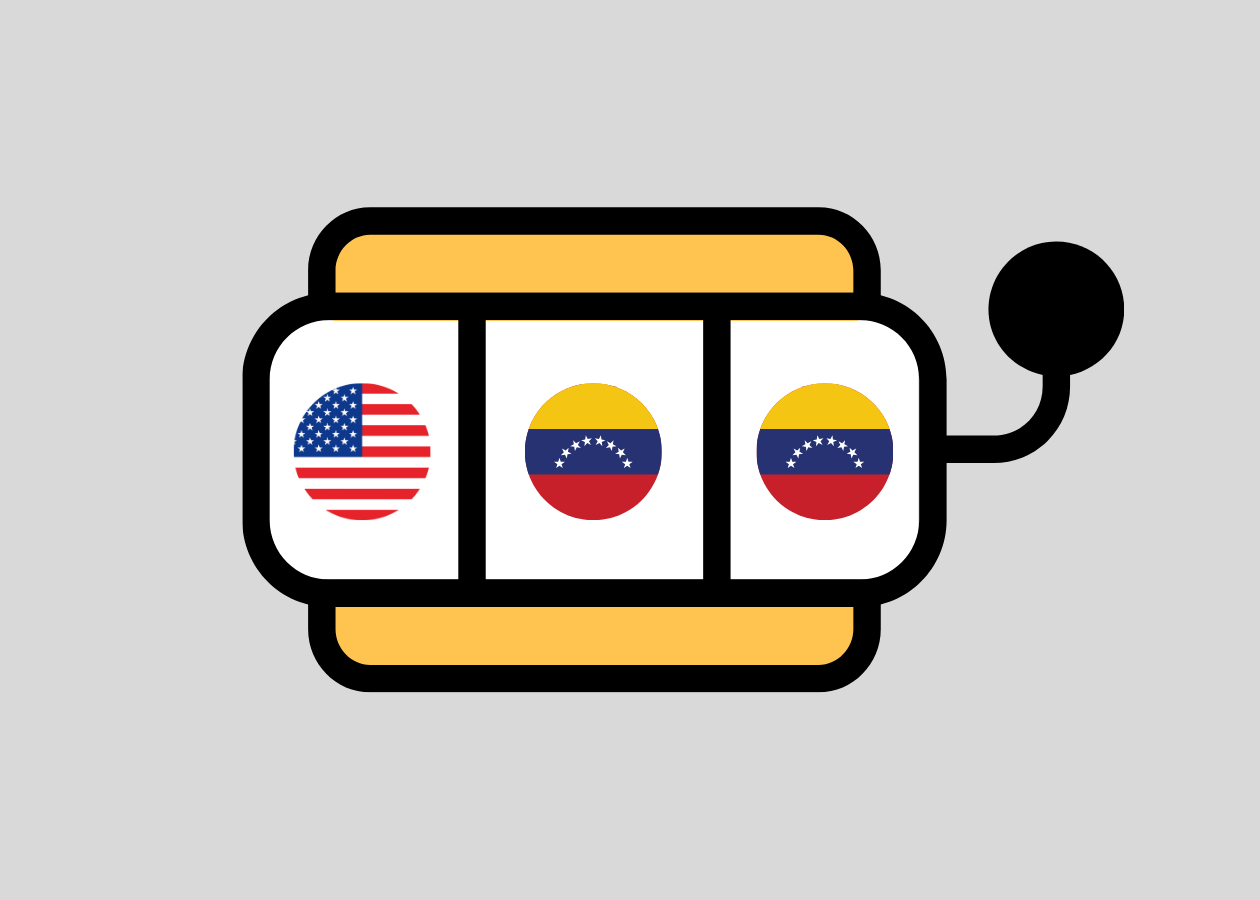
Gannon Van Dyke is also a gambler, but of a different kind. Using a VPN, he placed bets on Polymarket that Venezuela’s dictator, Nicolás Maduro, would be out of power by January 31, 2026. He put more than a third of his salary on that one hand.
In early January, Maduro was indeed deposed, and the wager paid out more than tenfold. Van Dyke made about $400,000, moved the winnings through a foreign crypto vault, and asked Polymarket to delete his account.
Claude Shannon, a mathematician widely credited as the founder of information theory, was once asked what type of information is best. “Insider information,” he answered. Van Dyke wasn’t just any market participant. He was a senior soldier in the US Army Special Forces, involved in the operation to capture Maduro. He had exactly the kind of information Shannon was talking about.
Van Dyke is now charged with illegally using confidential government information for personal gain. The military disciplines people every day, often not for violating laws, but for violating standards. The court will determine his legal guilt, but he is absolutely guilty of violating the trust and confidence placed upon him. His actions were unethical. They were dishonorable.
Systems that trade on uncertainty—casinos, financial markets, sports—are supposed to limit the use of unfair advantages. That is why insider trading is illegal. Yet we are accustomed to these abuses of access by business executives, by coaches and athletes, and by members of Congress. Each case erodes trust in the system and those running it. People question its legitimacy, and they stop participating in it.
ICYMI: Tune in to the latest episode of the Older/Wiser Podcast

The United States maintains the most expensive military in the world, and Americans trust the military more than any other public institution. The citizenry funds it with the expectation that it will operate with discipline, professionalism, and ethical restraint.
To maintain that trust, the military operates under a separate system of rules. During my time in uniform I was constantly reminded of the standards—legal or not: “Don’t do drugs”, “pay your bills”, “get a haircut”, “wear a belt” (really!). The military even has a separate system of justice to deal with violations of these standards, all to enforce discipline and, in part, to protect the trust borrowed from the public.
As a noncommissioned officer, or NCO, with almost two decades in uniform, Gannon Van Dyke would have recited the NCO Creed many times. Part of it reads: “I will not use my grade or position to attain pleasure, profit, or personal safety.” By converting his trust and confidence into financial gain, he not only violated this oath, but betrayed the social contract Americans have with their military.
This is not only about ethics; it is also about our collective security. Markets are information systems, made up of data points. Adversaries do not require access to a full intelligence picture. They only need fragments—signals. They collect these bits of information and aggregate them to form a more comprehensive and actionable picture.
Operational security is not only about defending tangible assets, but also about protecting these subtle indicators from our adversaries. Van Dyke’s bet was a signal. He created it. The platform broadcasted it. Iran and Russia almost certainly exploited it.
There is nothing new about trying to profit from a military outcome. During the American Civil War, financiers and commodity traders speculated on Union versus Confederate victory: cotton prices, gold, railroad stocks, and government bonds all moved based on battlefield news. What is new is the infrastructure that makes this behavior scalable. Platforms like Polymarket turn war, elections, and geopolitical crises into tradable instruments.
But not all information should be aggregated, and not all events should be turned into markets—certainly not by soldiers participating in them. We already have the frameworks to deal with gambling, national security, and insider trading; they should be applied here.
We have come to accept ethical disappointments in other parts of government. We expect them from politicians, even assuming they’re unavoidable. But we must not accept them from the military. For those who deal in life or death on our behalf, the standard must be one of ethical behavior, not merely legality.
Whether or not US Army Master Sergeant Gannon Van Dyke is guilty, his case should be straightforward. So should his punishment. Given that his actions were dishonorable, he should be demoted and receive a dishonorable discharge from the Service. Anything less signals that this kind of behavior is acceptable.
Like my old colleague Dave, Van Dyke may have had one bet that paid big, but when all the factors are considered, he is a net loser. And if such actions are treated lightly, we all lose.


And then there's the millions of dollars the commander in chief, his family and his friends are making on every statement DJT makes about the Iran war. It's all of a piece, but the little guys are the only ones held accountable.
Free And Fair Elections Under Attack: WE the People Must Respond
This Hartmann reporting(https://bit.ly/4wo97hi) is essential to Substack readers to bring awareness to the Nazi Republican assault on free and fair elections For the most part WE the People are unaware of this sinister plot by the Nazis to retain power forever
First steps WE must take:
Early voting is MANDATORY to ensure that any challenge to your vote can be thwarted
WE the People can fight this with awareness of this Nazi attempt and urging everyone of our friends, neighbors, relatives, and family to vote early to avoid being disenfranchised as a registered voter After voting one last step to check that your vote has been tabulated
Call your senators today through the Capitol switchboard at (202) 224-3121 and tell them you want algorithmic transparency legislation and Section 230 reform.
Make sure your voter registration is current at vote.org, check on your state-level legislators at openstates.org, and start telling everyone you know that science has now proven that the 2024 election wasn’t a free and fair contest of ideas
Also contact your state rep/state senator to introduce a trigger law and have it in place before the 2026 midterm election: if the federal government interferes with the election, the state will redirect federal taxes to an escrow account
Demand of any candidate that you support will make it a priority to stop at a federal level voting rights laws that close all of the criminal Nazi Republican loopholes that will guarantee voters free and fair elections