


A note from Garry Kasparov: Celebrate one year of The Next Move and save 30% when you upgrade to join our premium subscriber community and get invitations to exclusive Zoom conversations, early access to podcasts, and other benefits! Upgrade now and don’t miss our next premium subscriber-exclusive call where I’ll be joined by former White House attorney Ty Cobb and RDI CEO Uriel Epshtein—coming up on Thursday, April 30 at 5pm ET/2pm PT. Click here to register.
Issac Luna (Olvera) is a former US Marine Corps officer who fought for the Ukrainian military after the full-scale Russian invasion. He is the author of the book Reckoning Dreams and Fire, a memoir about his experience in Ukraine and other battles. Mr. Luna remains based in Ukraine. Follow him on X.
It was around this time in the spring of 2022 when the Russian army retreated in defeat from the outskirts of Kyiv.
Media outlets around the world rejoiced: “Irpin, Bucha, liberated.” I was there, as a volunteer in the Ukrainian army, but around me, no one celebrated. We suspected Putin’s troops might regroup and counterattack.
At the start of that year, I had been a business consultant in Houston, Texas. When Russia invaded Ukraine, I was outraged and wanted to help. Having been an officer in the US Marines, I thought my skills could be useful on the ground. So, on day four of the invasion, I quit my job and came to fight in Ukraine. I thought I might contribute as a planner or advisor, given my background. Instead, I joined as an ordinary rifleman—and sometimes as a rocket man—with no rank, no pay, and lots of unknowns.
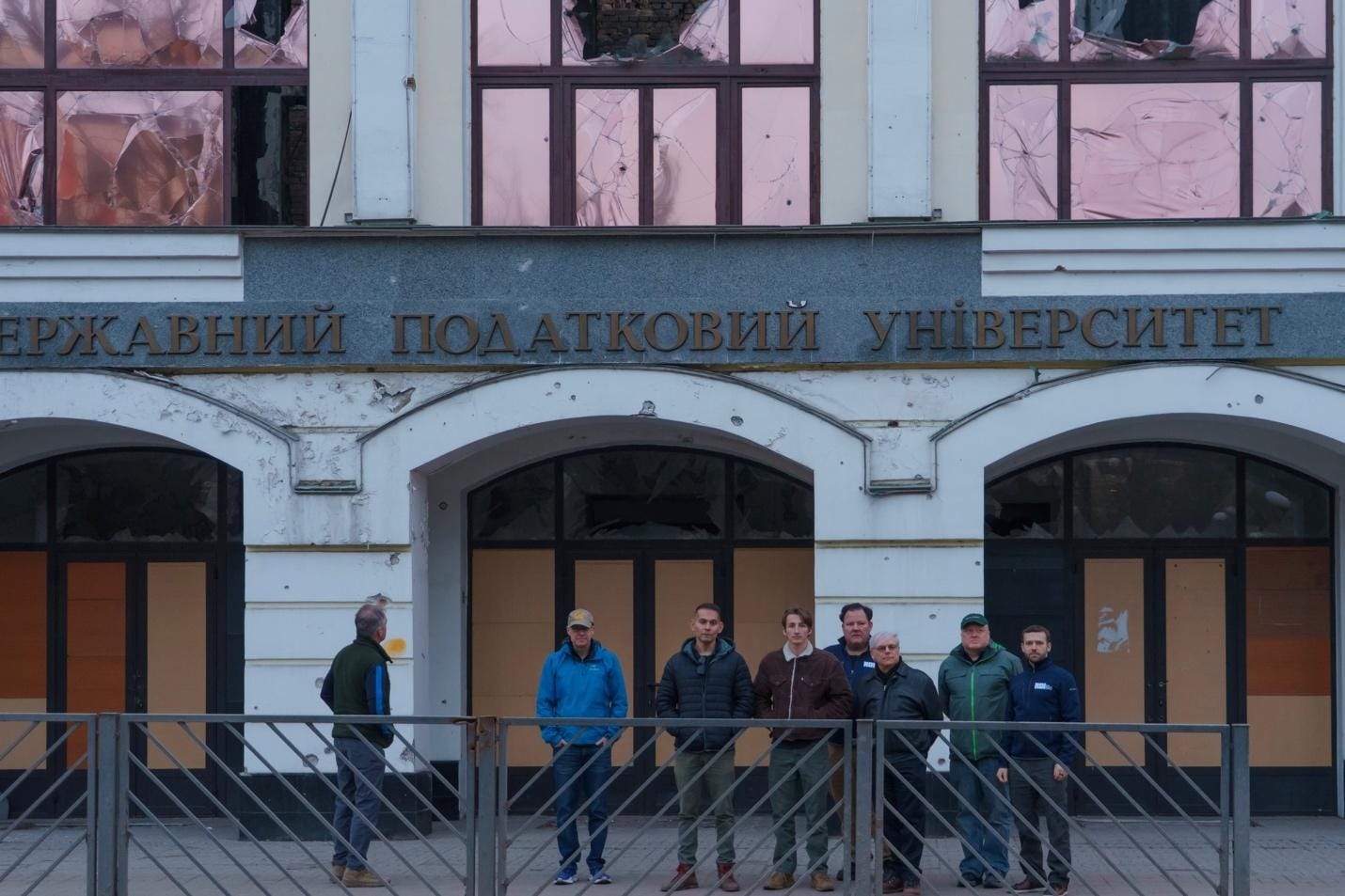
On my first mission, we occupied an empty residential tower across from the State Tax University, an elegant century-old building, in Irpin, a suburb of Kyiv. The street between us and the university was the battle line. Ukrainian forces controlled the south sides; the north was under Russian occupation—part of Irpin, and another suburb called Bucha. From our tower, we looked for Russian positions and called in artillery strikes.
On March 28, the Russians retreated from Irpin but remained in Bucha. We pushed forward to the edge of Irpin, into positions that Russians had just abandoned. Apartments had been looted—drawers emptied, closets overturned.
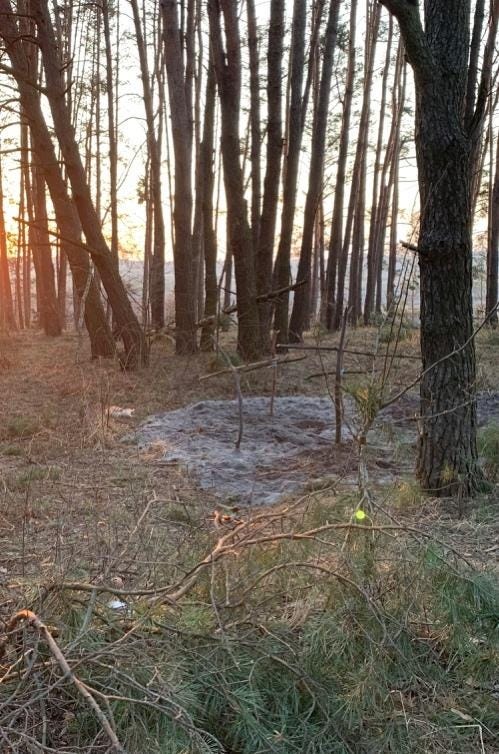
In the nearby forest, we found dead civilians, killed by artillery—six of them, some still wearing pajamas. We buried them. By then, Russians were also retreating from Bucha. On their way out, they indiscriminately fired more artillery. One barrage battered our position. We evacuated when the roof caught fire and collapsed. After a few days, I accepted that the Russians were not coming back, but the sense of victory was short-lived.
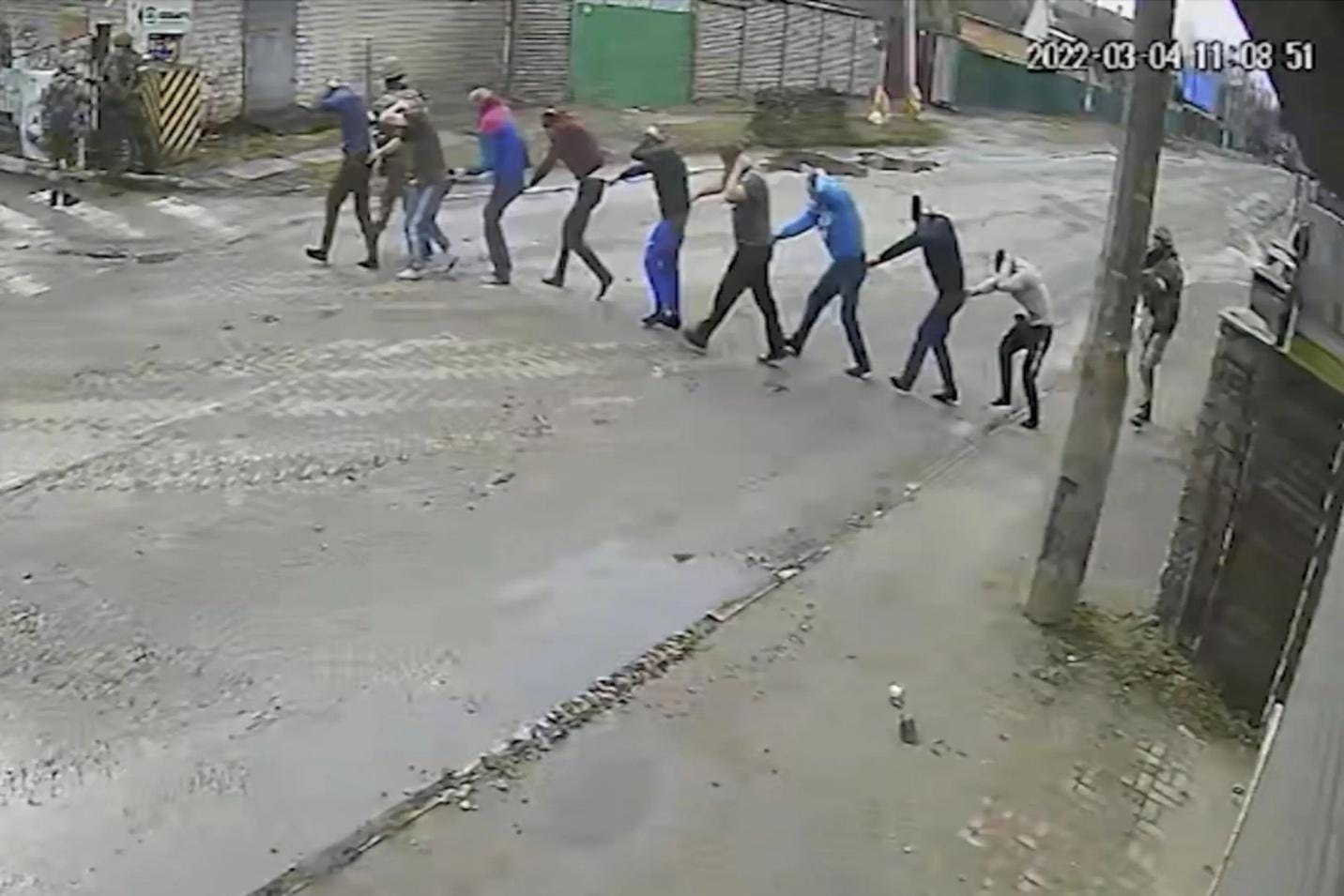
At the start of the occupation, the 76th Guards Air Assault Division, an elite Russian unit, established a headquarters at 144 Yablunska (Apple) Street, a kilometer behind the university.
After the Russian withdrawal, journalists and investigators entered the area. What had been a quiet, affluent suburb was now a crime scene. CCTV footage from a home on Apple Street showed Russian soldiers leading civilians at gunpoint toward the headquarters compound. It was the last time most of them were seen alive. Investigators found bodies scattered in the street. Others were found in basements with their hands bound, bearing signs of torture prior to execution. Many women reported being raped in homes that Russians had converted into barracks. These were not cases of collateral damage or victims of chaos; they were proof of a systematic terror campaign.
Volunteers, state investigators, victims, and witnesses identified many of the soldiers responsible for these crimes. They were members of units working under the command of the 76th Air Assault Division or adjacent to it. The most prominent units involved were the 234th and 237th Air Assault Regiments, the 64th Motor Rifle Brigade, and the 155th Marine Brigade. It has been four years since the massacres. Where are the perpetrators?
After their defeat outside Kyiv, those Russian units relocated to other parts of Ukraine, where they deployed the same vicious tactics. Yet while they escaped Bucha, they did not evade justice altogether—not all of them.
Igor Zharov and Aleksey Afonin, both lieutenant colonels in the 234th Regiment, were killed sometime in 2022, according to obituaries. Their commander, Colonel Artyom Gorodilov, is in prison, though not for the right reasons. In 2024, he was arrested in Russia—not for war crimes, but for corruption.
One particularly memorable update came through in July of last year. Mikhail Gudkov was a Russian officer at the center of events on Apple Street.
As a colonel, Gudkov commanded Russia’s 155th Marine Brigade in the Kyiv suburbs. He had advanced far and fast in his military career since then. By 2025, he was a major general and deputy commander of the entire Russian Navy. In July 2025, Ukrainian forces struck a headquarters inside the Kursk region of Russia. Gudkov, along with other senior officers, was killed.
For those of us who were there in Bucha and Irpin, there is no moral ambiguity in this outcome. His death, and those of his soldiers, was not a tragedy, but a consequence. We saw what was left behind. We walked through homes that had been stripped bare. We found civilians in the forest. We learned what happened on Apple Street. And then we watched the same units show up somewhere else and do it again. Whether a man like Gudkov personally ordered a specific execution or not does not change the fact that he was part of a criminal enterprise that perpetrated it. So, when news comes that one of those commanders is dead, my reaction is not complicated—it’s satisfaction, even glee.
Yet the death of Russian war criminals is also not closure. Nothing can provide that. Nothing can undo what happened. But it is at least imperfect justice.
ICYMI: Tune in to the latest episode of the Older/Wiser Podcast

In February 2023, Ukrainian troops captured a group of 17 soldiers in Luhansk province in Donbas. Among them was Nikolai Kartashev. He was not a high-ranking officer, but an ordinary soldier tied to the 234th during the occupation of Bucha. He confessed to killing civilians under orders as well as witnessing torture and the rape of a woman in a cellar. He identified co-perpetrators and commanders, yet he expressed no remorse and said he wanted to return to war. He is still in prison.
It is safe to say that many, maybe most, of the foot soldiers who perpetrated these crimes are dead. Many literally disappeared. They ended up blown apart, their remains shredded, unidentified and untraceable in the field or a morgue. Both the 155th Marine Brigade and the 237th Air Assault Regiment were destroyed in the subsequent months of the war.
In 2023, the 155th Brigade fought in the battle of Vuhledar, an absolute meat grinder. Columns of the 155th drove into minefields and kill zones. Dozens of vehicles were hit, and when the survivors bunched up, they were finished by Ukrainian artillery. More than 130 armored vehicles were destroyed in a single week, including 36 tanks. During the worst of it, between 150–300 marines reportedly died daily. The entire brigade was wiped out. Then it reconstituted and was destroyed again. And then again. This cycle of annihilation was repeated as many as eight times.
The 237th Assault Regiment left Bucha severely degraded, then relocated and experienced the same cycle as the 155th: it relocated, took staggering losses, reformed, and was destroyed again. By mid to late 2022, six months after Bucha, open-source analysts reported that the 237th effectively no longer existed. An entire criminal organization, wiped out.
The individual acts of Russian soldiers—executions, torture, rape—add to the list of charges, but they are not required to establish guilt. The war itself is a crime, beginning with Russia’s invasion of Ukraine. Everything that followed—Bucha, Irpin, Mariupol, Kherson—flows from that decision. Everyone who crossed that border as part of the invasion is guilty, as are those who commanded it—especially Putin. They are all criminals. In the countries where most people are reading this, accountability would come through courts. In this war, Ukrainians have no hope of such an outcome, and they do not wait for it. Russia will never persecute its war criminals, for Russian leaders are such criminals. Thus, for the criminals of Bucha, justice comes not by gavel, but by gun.


Commendable and inspiring. Justice matters. I share your cold fury toward the russian invaders, and the entire structure behind them.
May all Russian criminals receive battlefield justice, all the way up to POOtin. Slava Ukraini.