


Jay Nordlinger is a senior resident fellow at the Renew Democracy Initiative and a contributor at The Next Move.
A week and a half ago, CPAC, an American organization, held one of its regular jamborees in Hungary. Hungary, under Viktor Orbán, is a seat of the “postliberal” Right. Many such rightists have visited Hungary in recent days, boosting Orbán for a sixth term in office.
Marine Le Pen of France was there. So was Matteo Salvini of Italy. So was Geert Wilders of the Netherlands.
Both the Kremlin and the White House are going all-out for Orbán’s reelection. I wrote about this two weeks ago, here (“Putin and Trump for Orbán”).
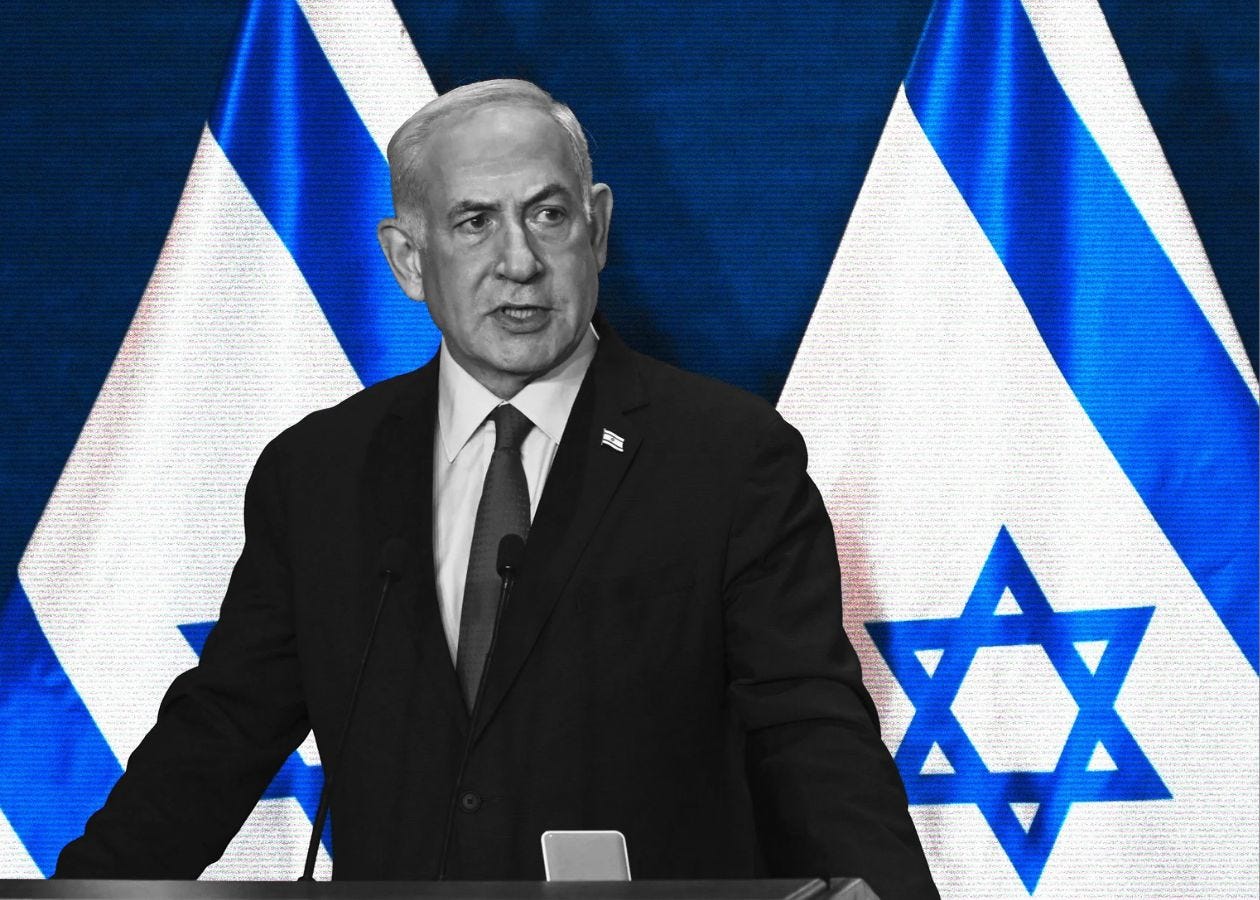
President Trump did not attend the recent CPAC conclave in Hungary, but he sent a video. Benjamin Netanyahu, the prime minister of Israel, was scheduled to attend in person, but the war with Iran kept him at home, and he, too, sent a video. For good measure, his son Yair spoke to the gathering.
Prime Minister Netanyahu told the CPAC-ers, “I want to thank you for standing up for Western civilization.” Then, speaking about his Hungarian counterpart personally, he said:
“I want to thank my friend Viktor Orbán. He has been like a rock. … I know many world leaders, and I can tell you he is right there at the top. Viktor Orbán means stability, safety, security.”
As a rule, a country is the ally of another country, regardless of who is in office. In democracies, leaders come and go. But things have gotten very personal lately.
Standing alongside Orbán in February, and addressing him, US Secretary of State Marco Rubio said, “Especially as long as you’re the prime minister and the leader of this country, it’s in our national interest that Hungary be successful.”
Ponder this business of “Western civilization” for a second. It is an article of faith among Orbán fans that he is a champion and protector of that civilization. Here is a tweet from Steve King, an Iowa Republican who was in Congress from 2003 to 2021: “History will record PM Orban the Winston Churchill of Western Civilization.”
(My comment was, “Personally, I would accord that honor to Churchill.”)
To some of us, Western civilization includes liberal democracy: the rule of law, an independent judiciary, independent media, etc. In 2018, Prime Minister Orbán declared, “The era of liberal democracy is over.”
Also, does Orbán’s alliance with Putin square with Western civilization? How about his hostility to Ukraine and its cause? Does that speak to you of Western civilization?
Orbán supporters point out that he is staunch against immigration, particularly of the Muslim kind. I must say, I agree that countries should retain their national character. There was a slogan, and a song, in the 1970s and ’80s: “Let Poland Be Poland.” Yes, and let Hungary be Hungary, let France be France, and so on.
It’s up to immigrants to assimilate to the countries they go to; it’s not up to countries to assimilate to the immigrants.
But here is what I deny: that it takes authoritarianism to have a sensible immigration policy; that it takes a partnership with Putin to have a sensible immigration policy.
Back, now, to Benjamin Netanyahu, who is my main subject today.
I have been a Netanyahu admirer for a long time. You could even have called me a Bibi fanboy. At a young age, I was drawn to the Israeli Right. I regard Menachem Begin as one of the outstanding political figures of the second half of the twentieth century.
ICYMI: Tune in to the latest episode of the Older/Wiser Podcast

The survival and flourishing of Israel is very important to me. I wrote about this in 2015, in a piece called “Hung Up on Israel.”
I think I first became aware of Netanyahu in the early 1980s, when he was deputy chief of mission at the Israeli embassy in Washington. Then he was Israel’s ambassador to the UN.
In my opinion, there was no better spokesman for Israel and its cause. He articulated principles and ideals—and facts—that were important.
Then, too, there was a mystique surrounding his family, as his valiant brother Jonathan was the only Israeli soldier killed during the raid on Entebbe. (This was the operation to rescue Israeli hostages in Uganda.) The raid took place on July 4, 1976, America’s Bicentennial Day.
Benjamin Netanyahu first became prime minister in 1996. His spokesman was David Bar-Illan, a pianist, whom I knew. Pianists as politicos—Israel is an unusual country.
In a later government, Netanyahu was finance minister. He was a liberalizer. Critics accused him of being “Thatcherite”—which was fine with me.
He returned to the office of prime minister in 2009 and has been there almost continuously since. Over and over, he clashed with President Obama—on Iran and other matters. I sided with Netanyahu. Did that make me unpatriotic? “America First!”
Well, tough. I thought Netanyahu was right.
In those years, I referred to him as the “Leader of the West.” (I applied the same designation to Stephen Harper, the prime minister of Canada.) In a forum once, I asked Paul Johnson, the British historian, “Whom do you regard as a major and impressive statesman today?” He named Netanyahu. “A man of destiny,” he said.
That sounded right to me.
As Netanyahu’s years in office wore on, my doubts set in. For one thing, I thought he was staying too long. He was not letting others in his party rise. Also, it seemed to me he was equating Israel’s security with his hold on power. But if the survival of a country depends on one man, who is mortal, it has no chance.
David Ben-Gurion, too, had a hard time exiting the scene. Frankly, I think my beloved Margaret Thatcher stayed too long. Speaking of beloved British prime ministers: Did Churchill really need that extra premiership in the 1950s? Did it do anything to burnish his record?
There was a touch of megalomania about Netanyahu. At his rallies, they chanted, “Bibi, King of Israel!” The democrat in me balked at that.
We should then note the charges of corruption. “But it’s the Left, it’s the media!” some of my friends say. That is reflexive in conservatives. “The Left, the media!” I understand this well.
Let me tell you something. I admired Reagan, and maybe over-admired him. I defended him at every turn: Iran-contra, Bitburg … Yes, I liked him, even loved him. But perhaps even more, I hated his enemies.
And you cannot let the “other side” win, ever.
In the summer of 2019, I was walking in Tel Aviv and saw the biggest campaign poster I had ever seen. It was on a skyscraper. I’m not sure how many storeys high it was, but—many. It showed Netanyahu and Putin in a chummy pose. The words read: “Netanyahu: In a league of his own.”
I was revolted—because I know who and what Putin is. I realize that nations must pursue their interests, and that the world is grubby, but I also know that there was a moral component to the founding of modern Israel.
Is Israel merely “another pleasant country on the UN roll call, somewhere between Albania and Zimbabwe,” to borrow Bush 41’s words?
At the end of 2022, Netanyahu formed another government—not especially conservative. It includes such figures as Itamar Ben-Gvir, a bona fide extremist. In Israel, my conservative friends were disquieted. In America? Not so much. They knew less. And the watchword had always been, “Bibi good, his critics bad.”
So too, the conservative or right-leaning media in Israel published robust debate about Netanyahu. Our own conservative or right-leaning media were less robust in this respect.
I also thought it was not especially good for Israel to be closely tied to the Republican Party—or any single party in America. The US-Israel relationship must be bigger than Trump and Netanyahu.
Here is a typical headline, from last month: “Trump demands immediate pardon for Netanyahu to focus on Iran.” (The article is here.)
Above, I mentioned Churchill and also Paul Johnson. In the 1930s, Johnson’s father had a negative view of Churchill. And he referred to him as “Churchill.” When the war came, the elder Johnson said something like, “We’d better get Winston.”
Paul Johnson, who was about twelve, noticed this: it had gone from “Churchill” to “Winston.”
I caught myself starting to say “Netanyahu” instead of “Bibi.” When I’m feeling warm toward the man, it’s “Bibi.” When I’m not, it’s “Netanyahu.”
About October 7, I will be brief: How could the government let Israel be naked unto its enemies, especially on the fiftieth anniversary of the Yom Kippur War? I figured that the ensuing commission would make the Agranat Commission—the one that investigated the failures in 1973—look like a picnic.
But there was a war to fight, and Israeli and pro-Israel wagons circled, more or less.
Now the Iran war is upon us. Netanyahu realizes that Putin is an ally of Iran, right? And that Orbán has had cozy relations with Tehran, too?
In October 2022, Netanyahu published an autobiography: Bibi: My Story. This was eight months after Russia’s full-scale invasion of Ukraine. In the book, Netanyahu describes Putin as “smart, sophisticated and focused on one goal—returning Russia to its historical greatness.” We all have different ideas of “greatness.”
Putin has re-Sovietized Russia, abolishing civil society and independent media. There are more political prisoners in Russia today than in the last stage of the Soviet Union. Putin exiles, imprisons, maims, or kills his critics. He is committing war crime after war crime in Ukraine, as he seeks to subdue that nation and re-subjugate it.
If this is “greatness,” then to hell with greatness.
February 24, 2025, marked the third anniversary of the full-scale invasion. In the UN, Ukraine offered a resolution condemning Russia for its aggression and calling for the withdrawal of Russian troops from Ukraine. The resolution passed 93 to 18.
Voting against the resolution were Russia, North Korea, Belarus, and Nicaragua. And Hungary (of course). And the United States. And Israel.
Of course?
Personally, I was sickened to see my country on that side of the vote—on the same side as Russia, North Korea, and the rest. Though it’s not my country, I was sickened to see Israel on that side too.
A question for you: If Benjamin Netanyahu puts paid to the Islamist regime in Iran and its tentacle Hamas—and maybe its tentacle Hezbollah, to boot—will anything that can be said against him pale in comparison?
Here at the end, I should “pull the trigger.” That’s what the late, great Norman Podhoretz instructed writers to do, especially in an opinion piece. You have to pull the trigger. You have to say what you believe, take a stand. Don’t leave the reader wondering.
The truth is, I’m ambivalent about Netanyahu. About “Bibi”! My only comfort is that others of my acquaintance are in the same boat.
More from The Next Move:

‘Patriots,’ Populists, and Putinists

A ‘whole global movement,’ as Nigel Farage said, gaining in political strength

Good piece. I think for all his undoubted intelligence; it’s time to move on. Especially after Oct 7
Trouble is who’s his successor in the Likud? And the way Pres Trump has pushed for a pardon -presumably encouraged directly or indirectly - is not good.
Well…since you asked Jay [and not that it would occur to anyone of my three readers that the Village Idiwitt ever actually holds fire…trigger warning], if the most recent iteration of the Bibi regime succeeds in erasing Islamofascists statist and diehard true believers in the Hadeath, I mean Hadith, proxies from the Middle East…like with Winston, I mean Churchill, his micro aggressions against the Israeli peoples and his macro aggression against humanity for having high praise for a cold blooded mass murderer and Stalinist revanchist Putin will pale in comparison…and will be forgiven, but not forgotten, if his not so secret handshake with The Don comes true…and in the not so distant political world future there actually is a Maro Gaza Resort Hotel and Casino…and the good people of Palestine have inalienable rights to freedom of…and FROM the religion of peace and war. Anywho, not that it matters, along with F.D.R., I put Churchill in my top ten list of the most overrated humans to ever live…and every time I see a picture of our dead President with Hitlers conspirator in starting the war in Poland…I think of what could have been, what should have been if Winston had made like Michael Corleone at Yalta and emptied …to his drinking buddies and buried a full metal jacket into the skull of one of history’s biggest mass murderers and war criminals…speaking of to boot.
In the meantime, thanks for writing and reminding me of just one more of the million reasons every American that has not sold their soul out to Heat Miser in the flesh should be absolutely ashamed of the biggest POSPOTUS palling around with terrorists like Putin, Xi and Un…like Winston shamefully did with Stalin, all for King and country…which, to the former, because I was blessed to be born in the U.S.A. I can still say @#$😡 Trump, I mean declare The Queen is Dead one of the top ten albums of The Eighties. Gotta run on. Thanks for taking my rant to the next level. Peace through superior mental firepower