


Is NATO dead? Find out on our next premium subscriber Zoom call, featuring former NATO Secretary General and Prime Minister of Denmark Anders Fogh Rasmussen. The conversation—exclusively for premium subscribers—will take place this Wednesday, May 27 at 9am ET. For more information and registration, click here.
Jay Nordlinger is a senior resident fellow at the Renew Democracy Initiative and a contributor at The Next Move.
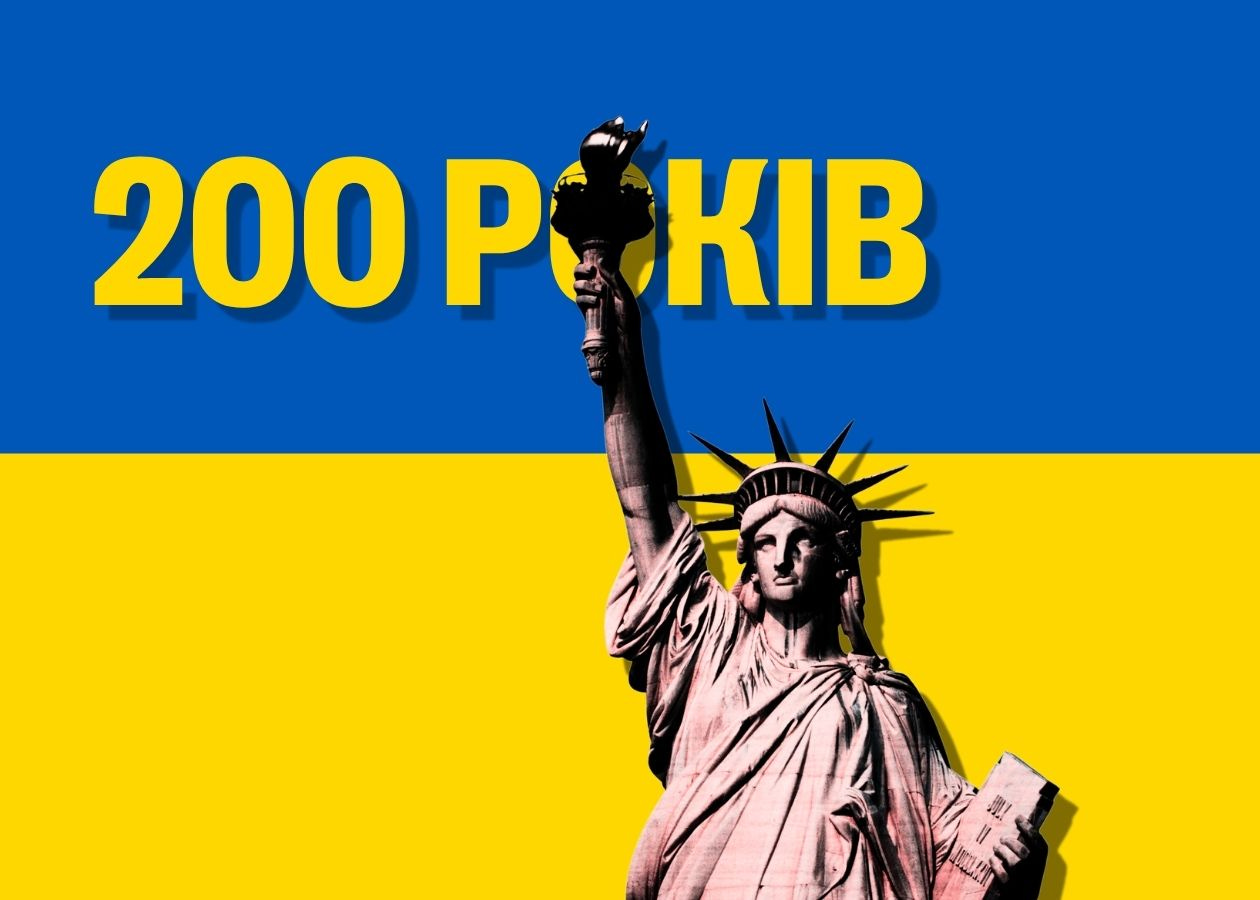
In 1976, Petro Ruban made a wood carving in the shape of a book. On the book’s cover was the Statue of Liberty, along with the words “200 Years.” Ruban intended the carving to be a gift to the American people on the occasion of their bicentennial. He had worked eight months on it.
The Soviet authorities, however, confiscated the carving. In short order, they confiscated the wood-carver, too. That is, they threw him into prison—again.
Ruban was not only a wood-carver, he was also a Soviet human-rights activist. More specifically, he was a Ukrainian human-rights activist. Ruban was a nationalist, believing in independence for Ukraine. This made him doubly intolerable to the Soviet state.
Today, as you can see, the Kremlin is still intolerant of Ukrainian nationhood—to the point of an all-out war of subjugation.
Last month, I wrote an article titled “People vs. Dictatorships.” I emphasized the importance of distinguishing people, or peoples, from the dictatorships that rule them. Ronald Reagan was conscientious about making this distinction.
He would often cite the cases of specific political prisoners. In 1987, he spoke to a Captive Nations conference, held at the Ukrainian National Catholic Shrine in Washington, D.C. I quoted this speech in my article last month.
Reagan talked about Petro Ruban that day. He identified him as “a prisoner in Special Regimen Labor Camp No. 36-1, one of the most notorious of the Soviet camps.” He mentioned Ruban’s Statue of Liberty carving, etc.
Reading this speech of the president’s, I got curious about Ruban. I looked into his life.
Of particular help was the Kharkiv Human Rights Protection Group, an organization started in Soviet days. It is affiliated with the Memorial society, a project started by Andrei Sakharov and his friends in the late 1980s.
(Sakharov, you will recall, was the great physicist turned great dissident.)
The purpose of Memorial is twofold: to document atrocities of the past and to promote democracy in the present. Obviously, Putin’s Kremlin has banned Memorial, along with Russian civil society at large. But Memorial people continue to operate in exile.
In 2022, Memorial shared the Nobel Peace Prize. (For an article of mine on the 2022 prize, go here.)
Petro Vasylovych Ruban was born on January 10, 1940. His birthplace was Konotop, a city in northeastern Ukraine. It was wartime, and Ruban’s father was a fighter pilot. “For having been captured by the Nazis, he became the victim of repression by the Soviets and never returned.”
I have quoted the Kharkiv group in its sketch of Petro Ruban’s life.
Understand that Soviet prisoners of war were considered traitors by the Soviet state. Stalin himself had a son, Yakov, who was taken prisoner. “In Hitler’s camps,” said Stalin, “there are no Russian prisoners of war, only Russian traitors, and we will do away with them when the war is over.”
Stalin had his daughter-in-law, Yulia, arrested as the wife of a traitor. She was imprisoned for a year and a half, and was never the same again.
(I wrote about Stalin and his family in a book called Children of Monsters: An Inquiry into the Sons and Daughters of Dictators.)
ICYMI: Tune in to the latest episode of the Older/Wiser Podcast

Petro Ruban was first sentenced to prison in 1959, when he was 19. For the next 30 years, almost, he would be in and out of prison—mainly in. Twenty-five of those years, he spent in prison.
What were the charges against him? In a police state, this hardly matters, for the authorities will choose whatever charge seems handy. But one particular charge against Ruban is noteworthy: “bourgeois nationalism.” In other words, he favored Ukrainian independence.
In the Gulag, Ruban experienced the usual hardships and tortures. There were also periods of relief. For example, it was in prison that he learned wood-carving. In the rare years on the outside, he did such carving for a living.
Once, while in the Gulag, he helped smuggle out the prison diaries of Eduard Kuznetsov. In 1975, the New York Times published an article that said, “Kuznetsov’s diaries are the latest stunning addition to the most significant genre of contemporary Soviet letters: the prison stories and memoirs from the camps.”
When Ruban was rearrested in 1976, it was for the Statue of Liberty carving. But Andrei Sakharov guessed that there was also another reason: officials were taking revenge on Ruban for having helped Kuznetsov. (The latter man would be swapped in a prisoner exchange with the United States in 1979.)
Ruban was released from prison in 1985—but he was very soon rearrested and reimprisoned. Why? In part, because he had criticized the Soviet invasion of Afghanistan. But mainly because he had applied to travel to the United States with his son, Marko, to seek medical treatment for him.
Marko, age about eleven, had been paralyzed in an accident. Ruban and his wife, Lidya, did not even have a wheelchair for him. They thought he could be helped with modern medical care in the US. But the Soviets did not take kindly to the request.
One report, published in 1988 by The Ukrainian Weekly, an exile outlet, gives a taste of Ruban’s spirit and character. Ruban “insisted that he should serve his sentence on the territory of his homeland, Ukraine.” For this and other offenses and effronteries, he was “constantly punished with solitary confinement.”
Thanks to Western pressure, Lidya and Marko were able to travel to the United States in January 1988. Reagan would travel to Moscow for a summit a few months later. Before Reagan’s arrival, in one of those gestures that became familiar in the Cold War, the Soviets released Ruban.
At the US embassy, Ruban sat next to Secretary of State George Shultz, no less.
In July of that year, 1988, Reagan gave his annual Captive Nations Week address. “Now, as you may recall, on this occasion last year, I spoke of Petro Ruban,” he said. He went on to say, “Last January, his son, Marko, was permitted to come here for medical treatment.” There was a story or two involved.
“When Marko got off the plane, his first words in his new country were, ‘I want to be able to stand on my own two feet.’ In his hands, he held something that he had labored on during the long plane trip from the Soviet Union. The boy whose father had been imprisoned for making a Statue of Liberty had embroidered Lady Liberty onto a towel.”
One more thing, from Reagan: “I’m happy to be able to tell you that Petro Ruban was released from prison and just last night arrived in this country to be reunited with his family. Petro and Marko are with us here.”
When Reagan died in 2004, Petro Ruban made a statement, which included these sentences: “I remember Reagan for his magnificent internal beauty. For me, he is the president who gave me freedom.
Ruban died in Kyiv—in independent, and not-yet-invaded, Ukraine—on September 26, 2011.
Let me ask a question: Who are the democratic leaders—the heads of state and government in the Free World—keeping an eye on political prisoners today? Speaking out for them?
Another question: Would political prisoners and other dissidents pay tribute to America today, as Petro Ruban did on the occasion of our bicentennial? We are now celebrating our 250th. Would their sons embroider the statue on towels?
There is no shortage of political prisoners to keep an eye on. In Russia, there are more political prisoners today than in the late Soviet period. Many of those prisoners are Ukrainian.
Here is one headline from the Kharkiv Human Rights Protection Group: “Russia sentences abducted and tortured Melitopol journalists to 26 years for pro-Ukrainian Telegram channel.” Those journalists are Denys Hlushchenko and Oleksandr Malyshev. (For the article, go here.)
Here is another headline: “71-year-old Ukrainian patriot Halyna Dovhopola unbroken after 7 years in Russian captivity, but ‘won’t survive another such winter.’” (Article here.)
There is astounding bravery in the world, to go with cruelty, tyranny, and depravity. I sometimes quote José Martí, the Cuban independence leader: “When there are many men who lack honor, there are always others who have within themselves the honor of many men.”


Thank you for sharing this story. For all his faults, Reagan was not only a politician but a man of principles. I often disagreed with his politics but there are a number of his actions and statements which put the modern Republican party to shame.
Maybe because my father was Polish and my mother was born 8 what is now western Ukraine, Russian dissidents were spoken of with a tone of honor. Such heroes were once talked about by normal media outlets. Where are the media now? Who are our heroes and models of righteous resistance? Thank you for reminding us that brave humans still live among us.