


Garry Kasparov is the founder and chairman of the Renew Democracy Initiative, which publishes The Next Move.
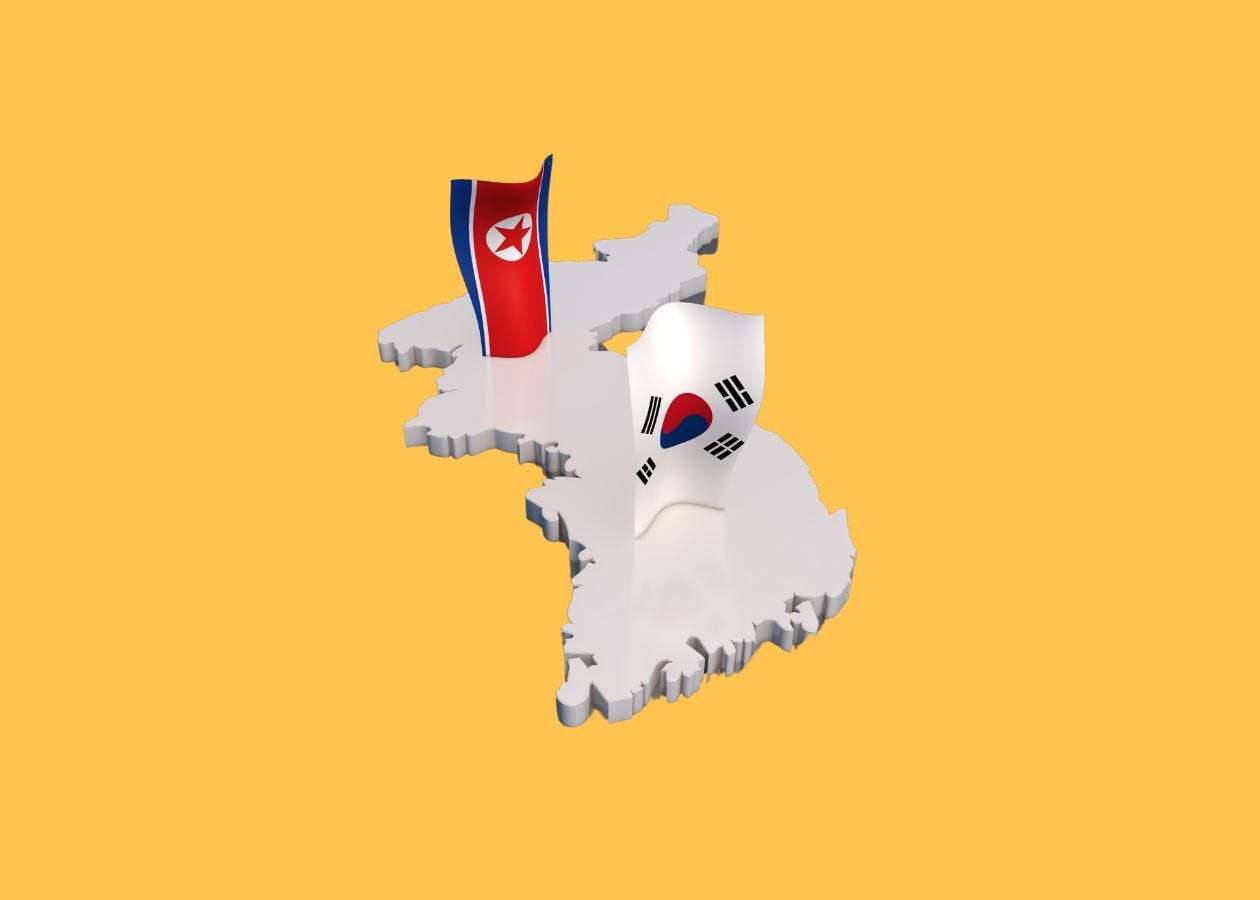
Donald Trump is an unhappy man these days. Most recently, he’s taken that unhappiness out on a staunch American ally, South Korea. The proximate source of the president’s rage was a planned US-South Korea summer military exercise. According to a Truth Social post drafted in Trump’s typical rambling style, the war games are “totally inappropriate and hostile” to the North Korean regime, which “has been unthreatening and respectful,” at least “as long as Donald J. Trump has been President” (yes, he really wrote this in the third person).
Apprised that it would be too late to call off the exercises altogether, the president decided to have them “substantially” reduced. The basis for Trump’s turnaround is, unsurprisingly, his “very good relationship with Kim Jong Un,” the hereditary dictator in Pyongyang.
It would be easy to write a column lashing out at Trump or poking fun at his affinity for autocrats like Kim. Naturally, I condemn Trump’s abandonment of South Korea, and I abhor the cowardly Republicans who know better but refuse to call out the president. However, simply saying this doesn’t help Seoul’s position.
Instead, we need to go back to basics. With Donald Trump as president, we can’t take anything for granted. The president exploits assumptions. For decades, Washington hummed along doing the same things—like supporting South Korea—“because that’s what America has always done.” Trump comes crashing in and asks “why?” and the professional policy class are frequently ill equipped to respond.
So we have to explain why South Korea matters—and why supporting America’s other frontline democratic allies matters too. The answer cannot be “just ‘cuz.”
First, there is the practical case. In his Truth Social post, Trump bemoaned the cost of the joint Korean-American exercises. But a strong deterrent is far less costly than open war. And if it should come to war on the Korean Peninsula, then a well-prepared South Korean military will shift much of the burden off of US forces.
Meanwhile, some Americans may want a foreign policy retreat, but dictators are not so circumspect. Kim’s government is already an active participant in Russia’s slaughter in Ukraine, contributing troops and hardware. Pyongyang would not pull back from Ukraine if America did the same in Korea; on the contrary, the Kim regime would have a freer hand abroad.
These arguments could be applied to any number of other frontline US allies: Japan, Taiwan, Ukraine, and America’s European partners in NATO.
But why intervene at all? This cost-saving argument presumes that protecting South Korea from Kim-family domination (or Taiwan and Japan from China, or Ukraine from Russia, and so on) is a worthwhile enterprise. Not everyone shares this assumption. Trump only does what benefits number one, and he’s happy to play the non-interventionist card so long as the friendly attention of dictators enriches him personally. Meanwhile, JD Vance and others in his orbit are committed heirs to the Lindbergh tradition. There’s an isolationist bent on the ascendant far-left as well.
Here, then, we need to lay out how engagement with the world makes the average American better off.
Most of Washington’s security partnerships are economic as well. In the example of South Korea, Seoul’s relationship with Washington involves billions in investments into US companies, supports strategic American industries, and has created tens of thousands of new American jobs in just the last couple of years.
South Korea, like many other US allies, provides a friendly presence along strategic transit corridors. The American public’s sudden introduction to the Strait of Hormuz is a stark reminder that these are not just geographic trivia questions but strategic choke points that can make or break global trade—and deliver a real financial blow to ordinary people thousands of miles away.
Donald Trump likes to cast allies as freeloaders and ungrateful charity cases (he is vindictive that the South Koreans will not get involved in his poorly conceived war in Iran). This is an awfully flat, transactional view of the world, and in almost every instance it is also inaccurate. US prosperity would be directly impacted if South Korea were absorbed by the Stalinist north.
Underlying this practical argument is the moral one. South Korea fought hard for its freedom. Its people sacrificed much in order to avoid being overrun by the north and its Soviet and Chinese accomplices.
For decades, South Korea was also under a dictatorship—though not nearly as repressive and closed a system as the one that still exists above the DMZ. Democratization was a long and challenging process. The South Koreans have remained vigilant, as all good stewards of liberal democracy must—just two years ago, parties across the political spectrum united to halt an abortive autocoup, a sort of Korean January 6, and prevent their country from returning to strongman rule.
The United States is organized around ideas, not blood and soil, and one of the great principles that I admire about this republic is its solidarity with its sister democracies.
Americans consolidated liberty under relatively easy conditions, without any really threatening neighbors and with ample room to grow across a sparsely populated continent—a sort of blank slate. South Korea, Japan, Taiwan, the European NATO allies, Ukraine, and others built free societies under far more challenging circumstances, in complicated geopolitical environments, on top of centuries of fraught history. Ensuring their democratic experiments continue to succeed is something that Americans can and should take pride in.
None of this can be treated as obvious or guaranteed. Through two administrations, Donald Trump has shown that longstanding custom is easily flouted. The things you and I consider virtuous about America—like supporting other democracies—are things that we will need to proactively make a case for, every single day.


To me this makes sense. You raise issues here concerning the value of democracy that don’t get discussed.
This is another example of Trump disrespecting another ally because he’s unable to find any value in the alliance. Trump is poorly informed either by choice or not. The war with Iran is a case in point.
Voltaire memorably said that the Holy Roman Empire was neither Holy, Roman, nor an Empire.
The Democratic People's Republic of Korea is an autocratic family monarchy.