


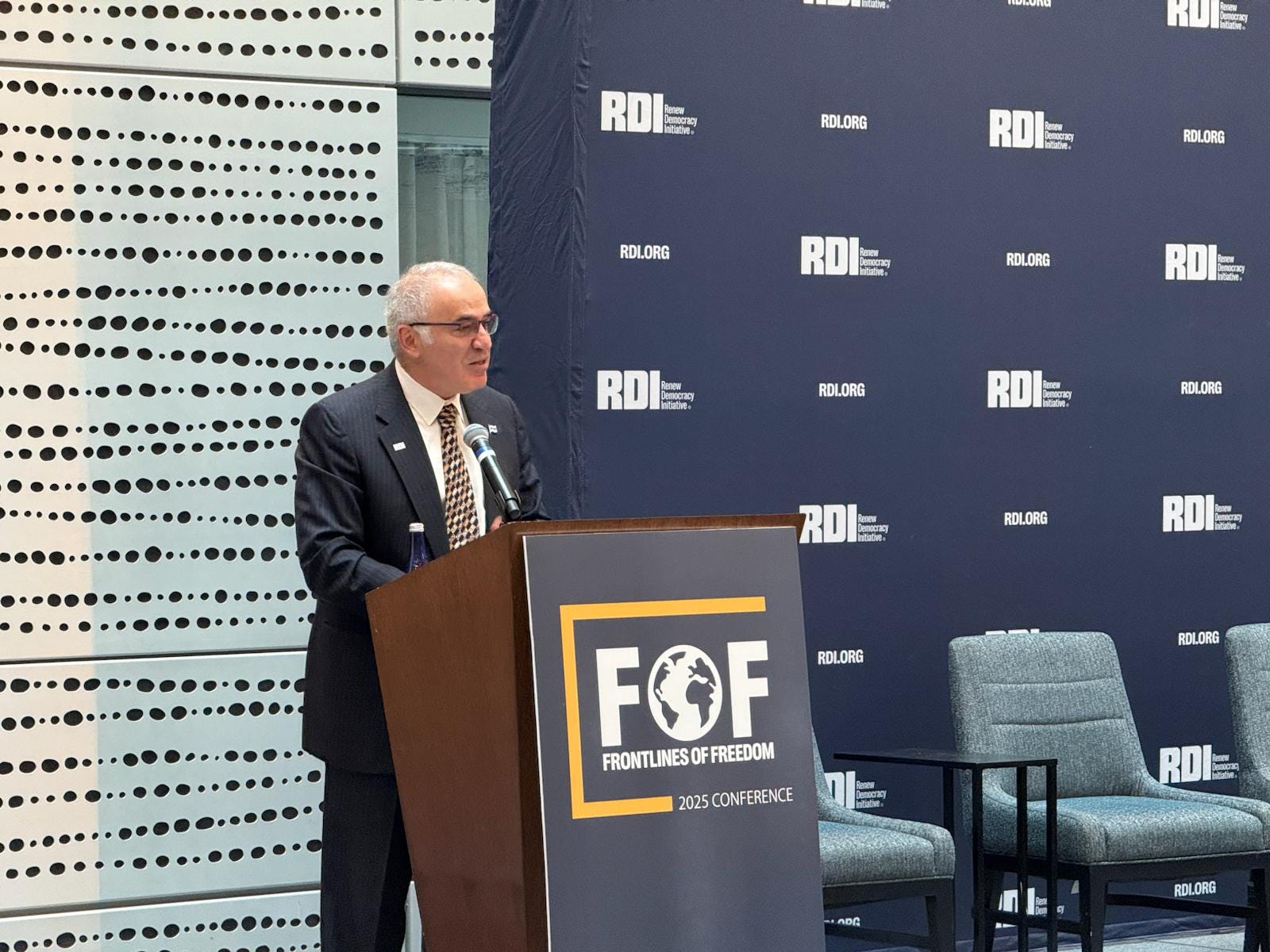
I delivered this speech this morning to the attendees of RDI’s Frontlines of Freedom Conference in Washington, DC. Tomorrow, I’ll be joined by Senators Mark Kelly and Peter Welch to cap off the conference. If you’d like to join us, we still have a few spots remaining.
Don’t wait to register! Click here to sign up, and I hope to see you in DC.
It’s become popular—especially in the last ten years—to refer to Washington, DC as “the swamp.”
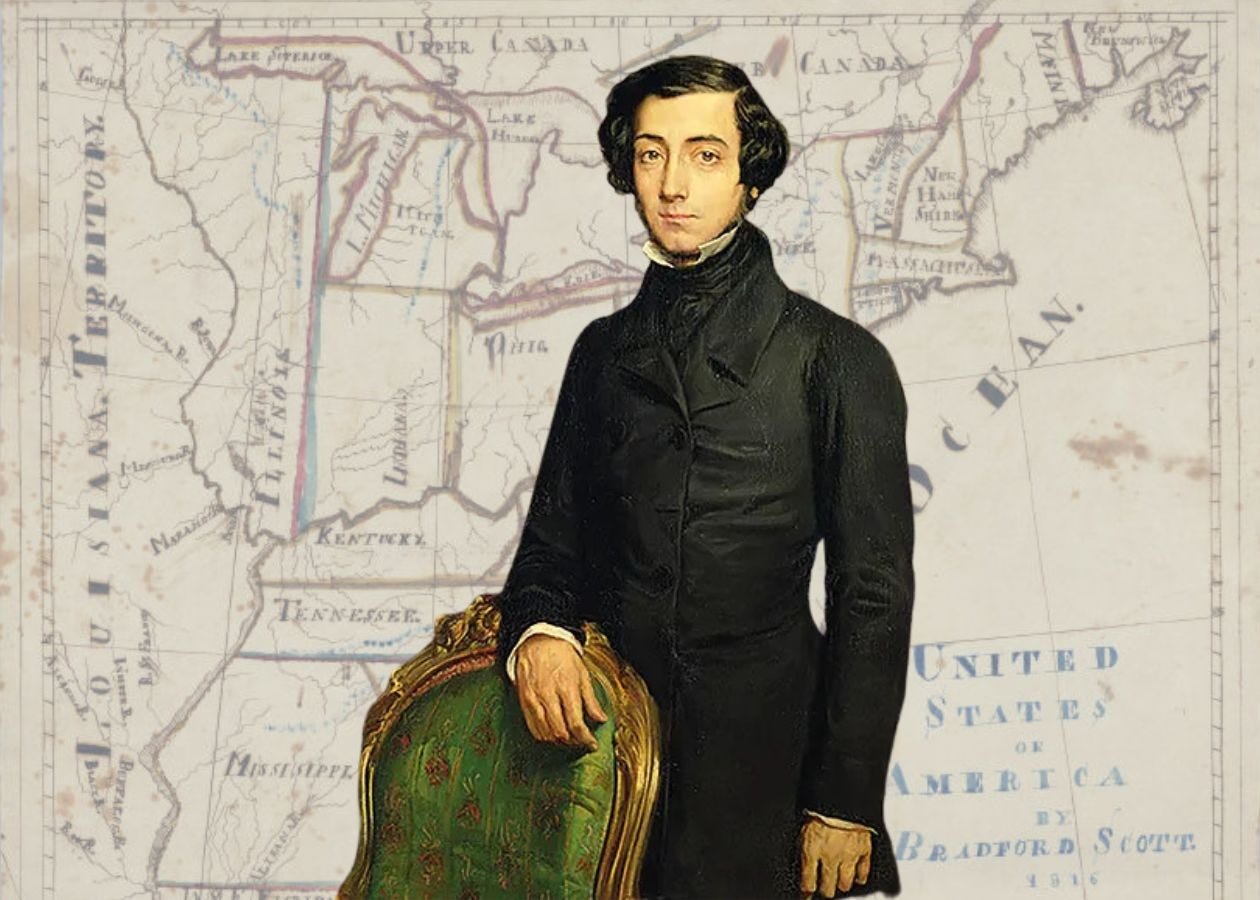
Nearly 200 years ago, a young Frenchman you may have heard of—Alexis de Tocqueville—had an even less flattering description of this nation’s capital.
“An arid plain scorched by the sun.”
De Tocqueville continued, “Unless one is Alexander or Peter the Great, one should not get involved in creating the capital of an empire.”
So here we are, in an arid plain! We bring you all to the nicest places.
De Tocqueville may not have been terribly fond of this city but he forged a deep appreciation of American freedom. In the early nineteenth century, he crossed the Atlantic from Europe to travel all around the young United States. He recorded his observations in the timeless volume we know as Democracy in America.
Can you name any other political books from the 1830s? Maybe a handful of you—this is probably the most informed crowd you can gather. But in general, probably not. Why is Alexis de Tocqueville part of the American popular political imagination?
The answer is that the author was French, and not American.
In de Tocqueville’s day, France had been rocked by two revolutions and the rise and fall of an empire in just over forty years. He was an outsider in the early US—both in the literal sense, as a foreigner, and because his experience was so vastly different from the relatively tranquil lives of most Americans.
The Renew Democracy Initiative is a Tocquevillian exercise. Turn on any cable news network, and can hear many intelligent and passionate Americans opine about their feelings on the state of the union. There is nothing wrong with that, and we will hear from many such American patriots over the course of the next two days.
But in order to truly stand out, we need to bring in that outsider vantage, that mirror on American democracy. Speaking for myself, being shoved into the back of a Russian police van gives you a different perspective on freedom than being born into it. And as dissident experiences go under dictatorship, mine was relatively mild. Most Americans aren’t aware of this.
The great political battle now is the battle for the narrative. Dictators are reaching across borders to silence their critics in the supposed safe haven of the United States. Their thugs harass, surveil—and in the case of my friend Masih Alinejad, even attempt to murder—those who dare to speak up. And these regimes’ media fixers and lobbyists work overtime to convince Americans to look the other way.
Closer to home, extremists in the US on the far-left and far-right produce slick videos and blast them out to millions of followers. The instrument of political control will be a podcast, not a putsch.
In this environment, we must be able to telegraph the urgency of our pro-democracy message above the noise.
This is the role of the Renew Democracy Initiative. This is why we have rallied over 100 political dissidents from more than 40 different repressive countries under the banner of the Frontlines of Freedom program. This is why we have convened this Frontlines of Freedom Conference. To serve as de Tocquevilles for the twenty-first century.
We spent yesterday working with dissidents to sharpen their stories, to help them break through into the American public consciousness and advance freedom in this country and around the world. Now, over the next two days, we’ll be bringing our dissident community together with RDI’s broader coalition of leaders in media, business, and public service. Thank you all for joining us in this “arid plain.” I’m looking forward to telling the story of freedom together with you.
More From The Next Move:
“NATO Doesn’t Exist”

From Garry's remarks in Halifax: Ukraine is fighting the war NATO was built to fight.
A Foreign Plot. A Test of American Freedom.

Iran tried to murder activist Masih Alinejad in Brooklyn. Her case should rally Americans around our First Amendment freedoms.
Tocqueville remains relevant precisely because he understood that democracy is not simply a moral ideal but a fragile social and institutional arrangement—one that depends on fair political competition, limits on concentrated power, and shared conditions of deliberation. What many contemporary systems call “democracy,” however, often misdirects attention by focusing on the label (“rule of the people”) rather than on what Tocqueville actually worried about: how power is organized and restrained in practice.
From this perspective, democracy today functions less as genuine popular rule and more as a regulated struggle for power. Its current crisis reflects two deeply Tocquevillian failures. First, wealth and elite connections increasingly dominate political influence, undermining the relative equality Tocqueville saw as essential to democratic life. Second, the erosion of shared civic and epistemic ground—once supplied by common institutions, habits, and norms—has left citizens unable to deliberate across differences. Tocqueville warned that when equality and common ground collapse, democracy gives way not to freedom but to soft forms of domination and mutual hostility.
This also helps anticipate a common Habermasian objection: that science cannot provide normative foundations for politics. The difficulty today is that excluding science from normativity leaves democracies without any shared ground at all, especially as competing political belief systems—religious, nationalist, ideological—fragment the public sphere. Tgmenks addresses this gap by treating normativity and morality as natural phenomena tied to the survival conditions of the Ecological Niche of Knowledge, allowing scientific insight to inform the regulation of power without collapsing politics into technocracy.
Seen this way, the problem is not that Tocqueville is outdated, but that modern “democracies” have drifted away from the very conditions—fair power regulation and shared epistemic ground—that he believed were necessary for democratic life to remain inclusive and non-destructive.