


Garry Kasparov is the founder and chairman of the Renew Democracy Initiative, which publishes The Next Move.
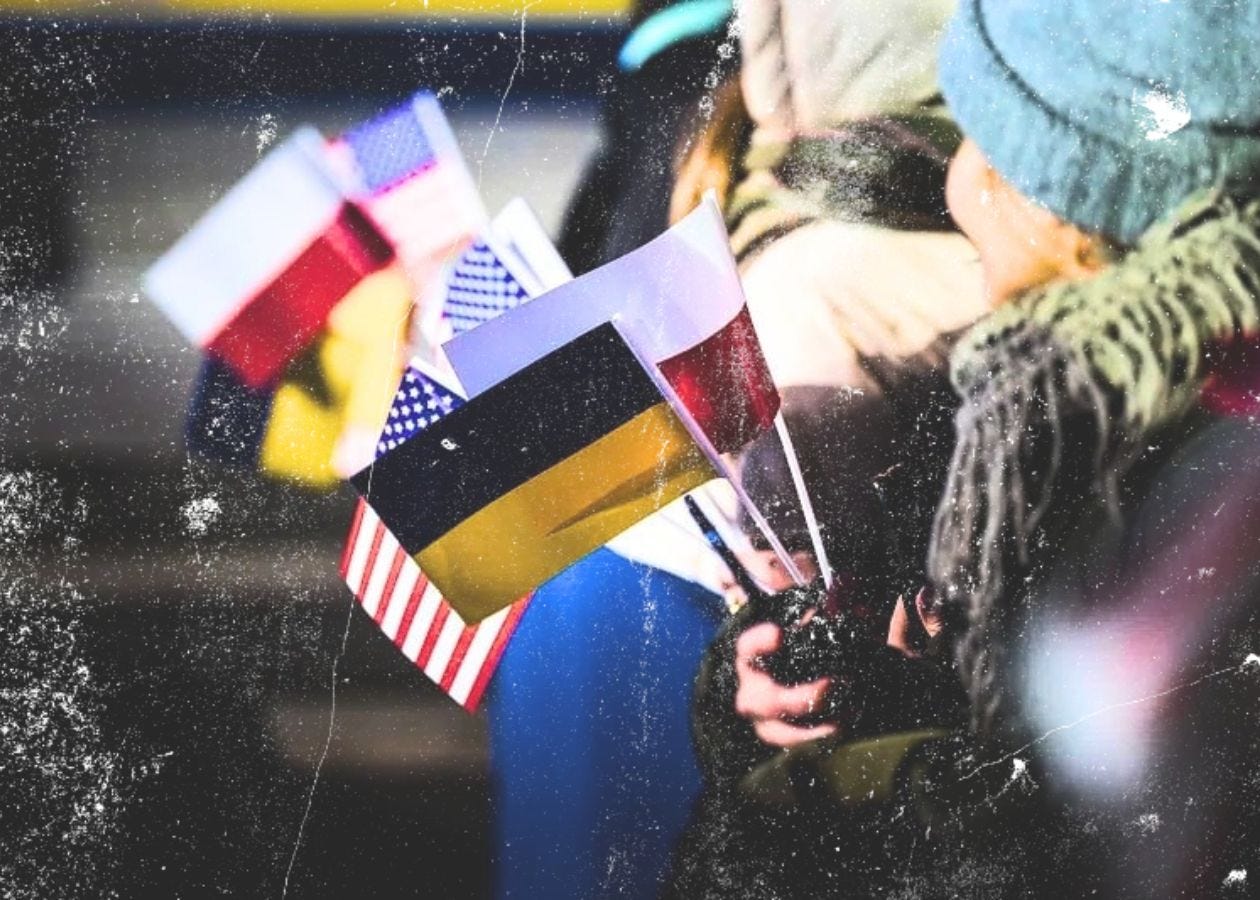
Last week, I was in Poland on a personal diplomatic mission. I met the president, the foreign minister, a former prime minister, and the mayor of Warsaw. My goal was simple: strengthen a coalition for Ukrainian victory and against Russian imperialism.
On its face, that task might appear straightforward, especially in a place like Poland. As I’ll explain, things are never so simple.
Like the Ukrainians, Poles have also experienced the bitter taste of Russian imperialism for generations. Tragedies like the Katyn massacre—the murder of nearly 22,000 Polish officers by the Red Army—are seared into the Polish national consciousness. The Soviets invaded Poland along with the Nazis in 1939, and Poles lived under a Soviet-backed communist dictatorship for nearly half a century after the war.
All of that means a basic understanding of the Russian threat is baked into Poles’ DNA. After Russia invaded Ukraine, Poland stepped up to provide critical aid. The Polish government has provided the Ukrainian military with more tanks than any other country. Meanwhile, Poland hosts nearly a million Ukrainian refugees, making it the number two destination for people fleeing the Russian invasion.
The sudden arrival of such a large foreign population naturally puts a strain on even the most harmonious relationships. Polish law enforcement have reported an uptick in xenophobic attacks on Ukrainians, occurring everywhere from a construction site where refugees work to the schoolyard where their children play.
Add to this the fact that Poland and Ukraine have their own complicated backstory. Volodymyr Zelenskyy recently designated a Ukrainian military unit as “Heroes of the UPA”—the World War II-era Ukrainian Insurgent Army. To Ukrainians, the UPA are freedom fighters who resisted Soviet-Russian colonization. Poles remember the UPA as the villains behind the murder of their countrymen in the borderlands between Poland and the USSR. Americans may be accustomed to viewing World War II as a binary conflict, but many Central and Eastern European nations were caught between the twin evils of communism and fascism.
ICYMI: Tune in to the latest episode of the Older/Wiser Podcast

In July, videos of Polish men beating a young Ukrainian couple went viral. There have been calls for an end to military aid to Ukraine until Zelenskyy withdraws the UPA honor. Lech Walesa, the heroic dissident and Poland’s first post-communist president, removed a Ukrainian flag pin from his chest. Walesa had worn the pin from the beginning of Russia’s invasion, and had previously lobbied the US government to provide more support for Ukraine. Meanwhile, the current president, Karol Nawrocki, rescinded Zelenskyy’s Order of the White Eagle, the highest award conferred by the Polish government.
Tensions about refugees and history are now feeding off of each other. Anti-Ukrainian sentiment in Poland is at its highest point since the full-scale invasion began.
This is the complex situation into which I stepped. I met with President Nawrocki, who’s affiliated with the right-wing Law and Justice party, and I met with Warsaw Mayor Trzaskowski from the liberal Civic Coalition (Trzakowski ran against Nawrocki in the last presidential election). I saw my friend, Foreign Minister Radek Sikorski of the Civic Coalition, and I shared a long conversation with former Prime Minister Mateusz Moriawecki, who led a Law and Justice government for six years. Now he’s launching a new political party that he describes as “the most lefty of the righties.” Anyway, I was not in Poland to pick sides; I was there to repair a coalition that spans the political spectrum.
My message was clear: Whatever Poland’s historical differences with Ukraine, they share a common enemy in Russia now, and the alliance between Warsaw and Kyiv is essential for both. A Russian missile landed on Polish territory during my stay, putting a very fine point on that argument. Vladimir Putin is actively probing NATO’s defenses, and I believe an open attack on an alliance member— probably one of the Baltics—is coming soon.
Of course, many friends of Ukraine would also humbly advise that Kyiv practice a bit of pragmatism in its dealings with Poland. Nevertheless, the priority should remain the same. Poles and Ukrainians might look to fellow democracies Japan and South Korea for inspiration. Tokyo and Seoul are finally rekindling their relationship despite a painful history because the threat from North Korea and China is too immediate to suffer decades-old distractions.
Americans, too, should consider what it means to prioritize and build a broad coalition for Ukraine. Zelenskyy recently caught flack from left-wing pundits like Mehdi Hasan for taking an interview with MAGA influencer Laura Loomer, who previously parroted the pro-Russian line. It’s certainly fair to question the motivations behind Loomer’s about face—grifters tend to follow the money. But people in the Ukrainians’ position can’t afford to pick and choose. The truth is that I don’t even agree with my Polish hosts on every single issue, but those private disagreements are unimportant. If Loomer’s conversion in turn converts her followers on the American right, then it will have been worth it. New recruits in the global fight for freedom over tyranny are always welcome.
More from The Next Move:
What the Hell Is a “NATO-Style Security Guarantee” for Ukraine?

More meaningless jargon from the foreign policy blob on NATO, Ukraine, and Russia.

A zillion thank yous for all your incredible work. Poland must be in conjunction & 100% with Ukraine
I really, really appreciate your efforts. I hope they bear fruit. In any future I can allow myself to wish for without being unreasonable there should be serious defense collaboration between Poland and Ukraine.