


Jay Nordlinger is a senior resident fellow at the Renew Democracy Initiative and a contributor to The Next Move.
Gulchehra Hoja has had a rough couple of months. On August 3, her brother died. (He was her only sibling.) On September 3, her father died. They were in faraway Ürümqi, the capital of East Turkestan, in northwestern China.
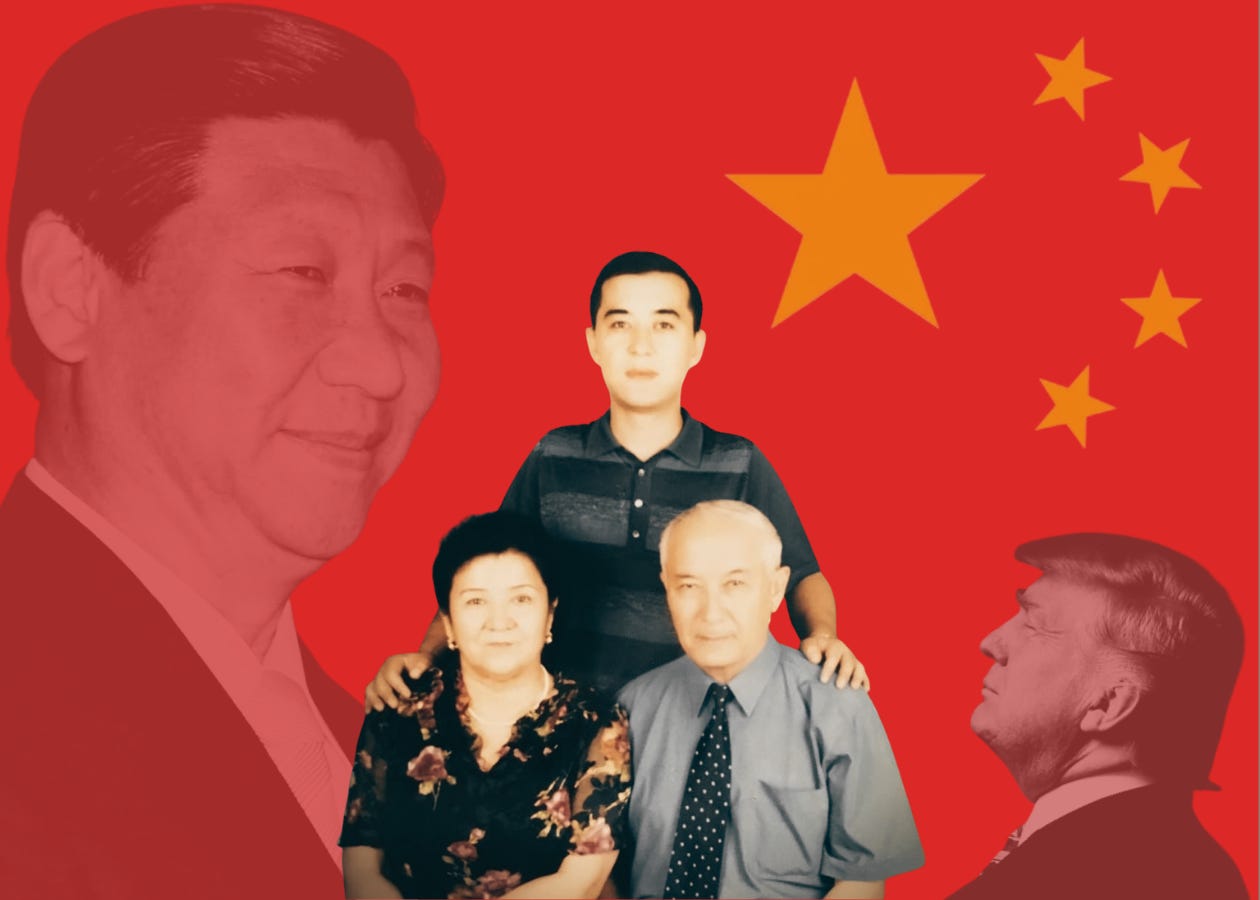
They were Uyghurs. Gulchehra is a Uyghur-American journalist, who worked for Radio Free Asia for 25 years. Xi Jinping, the Chinese dictator, is in America this week. Gulchehra hopes that we will spare a thought for the Uyghurs.
Radio Free Asia was established in 1996, and its Uyghur service two years later. RFA, along with other such broadcasters, was shut down last year. It has resumed broadcasting, however, though in rump, shoestring fashion.
For all these years, RFA has provided the only independent news service in the Uyghur language. In the last decade, this service has been especially important, as the Chinese government has unleashed ferocious persecution on the Uyghur people.
It was RFA’s reporting that led the State Department, in 2021, to designate this persecution a genocide.
Gulchehra Hoja is an old friend of mine, and I will refer to her as “Gul,” the name she goes by. Anything else would seem too stiff or formal to me. I wrote about Gul’s life in 2021, here. Today, I will offer a brief sketch.
She was born in 1973, in Ürümqi. Her father, Abduqeyum Hoja, was a well-known archaeologist and author. Her mother, Qimangul Zikri, was a pharmacist and professor of pharmacology. Her brother, Kaisar, came a year and a half after Gul herself.
Her plan was to become a teacher, but she went into television instead—and was very successful at it. She created and hosted children’s programs, in both Uyghur and Chinese. She was rather famous.
In 2001, she took a fateful trip to Europe. There are many sights to see on that continent, but Gul spent a lot of time on the Internet. This was impossible back home. And she learned things: about the Uyghur diaspora, about Chinese propaganda. Also, she discovered the existence of Radio Free Asia.
Bowing to conscience, she offered her services to RFA.
Once in America, she placed a call to Ürümqi. She told her father where she was and why. There was a long pause—10 or 15 seconds. Finally, her father said, “Oh, my brave daughter.”
Then it started—the targeting of Gul’s family and friends by the Chinese government. Her parents were forced to retire. They were essentially under house arrest. Kaisar had been set to marry, but that went up in smoke. The authorities put pressure on the young woman’s family.
This has always pained Gul, as many things have.
In January 2018, she published an interview with a survivor of the gulag: Omurbek Eli. By “gulag,” I mean the concentration camps set up by the Chinese government to confine and brutalize the Uyghurs. Gul’s was the first interview with a survivor ever to appear in the media.
Three days later, the authorities rounded up 25 of Gul’s relatives—a full 25. Some of them, she had never met, as they were born after her defection.
Her mother was imprisoned for about two months. Her father would have been in prison, but he was in the hospital, having suffered a stroke.
In prison, in the camps, Gul’s mother saw and experienced horrible things. The food, such as it was, was so wretched, she did not want to eat it. But she did. She later told her daughter, “I did it for you. I had to survive, because I did not want you to blame yourself for my death.”
Gul’s brother, Kaisar, was arrested several times and imprisoned for three and a half years.
Traditionally, a Uyghur daughter takes care of her elderly parents. This, Gul very much wanted to do. But the responsibility fell to her brother, who never married. This weighed on Gul, heavily. He would reassure her: “You are doing important work. We’re all proud of you.”
ICYMI: Tune in to the latest episode of the Older/Wiser Podcast

In 2019, Gul won a Magnitsky Human Rights Award. The Chinese government labeled her a “terrorist” and put her on its Most Wanted list—where she remains.
Routinely, the Chinese government has retaliated against the families of RFA journalists. We can only try to imagine the guilt and agony that comes with this.
Shortly after President Trump was sworn in last year, his administration set about abolishing the country’s foreign broadcasting services: RFA, the Voice of America, etc. Dictatorships could hardly believe their luck.
I wrote about this in a piece titled “Radios and Lifelines.”
An editorial in the Global Times, a Chinese Communist Party organ, said, “The so-called beacon of freedom, VOA, has now been discarded by its own government like a dirty rag.”
A former editor-in-chief of GT, Hu Xijin, put out a statement of his own: “Voice of America has been paralyzed! And so has Radio Free Asia, which is just as malicious toward China. How truly gratifying!”
RFA ceased operating in October of last year. Many could not help noting an irony: For 30 years, the Chinese dictatorship had tried to block and jam RFA. Now the US government was accomplishing the task.
This year, RFA has resumed operations, though in “rump, shoestring fashion,” as I have said. The agency has a handful of contractors, who report stories. These are valuable stories nonetheless.
In this article, Shöhret Hoshur reports that Uyghur children are being forced out of school and into manual labor. In this article, Tahir Izgil tells us about a Uyghur family, arrested for sending food and the like to a relative in Turkey.
Gulchehra Hoja is contributing stories here and there—to Reporters Without Borders, for example. She is working while mourning. Her father had been bedridden for 11 years, looked after by her mother and brother. Her brother was 51 and had been in good health. He was found dead, shocking and puzzling the family.
Gul and her mother have their doubts about how natural Kaisar’s death was. Can anyone fault them for that? I think of an expression from Garry Kasparov: “I believe in coincidences, but I also believe in the KGB.”
(Kasparov, the chess champion and Russian dissident, is the founder of the Renew Democracy Initiative and its publication, which you are reading: The Next Move.)
“My father was so hopeful that he would see me again one day,” says Gul. Her brother was hopeful too. In fact, “he was the most optimistic person I knew.” Gul’s mother is left, and she will turn 80 this year. It goes without saying, but I will say it anyway: Gul longs to see her mother, embrace her, take care of her.
My friend is not giving up hope. “Even in the camps,” says Gul, “my mother and my brother did not give up hope, so why should I?”
Through tears, though in defiant tones, Gul says, “The Chinese government thought they could intimidate me into silence. But I am still speaking.” She further says, “Freedom begins when we refuse to be silenced.” A person has to fight through the fear.
On Thursday morning, President Trump tweeted the following: “I met President Xi at the plane (Airport!) yesterday and he looks strong, vibrant, and fit - Better than ever. Madam Xi, of course, BEAUTIFUL!”
How are the Uyghurs in the gulag looking? How about the Chinese political prisoners?
Trump and Xi, says Gulchehra Hoja, are “the two most powerful people in the world.” They are in a position to do much good. “The Creator gave them this chance, and He is watching how they will use it!”
Gul is grateful to have the chance “to tell the truth, to live with dignity, to be a real human being.” Where does the real power lie? “We will see in the end,” says Gul, “and I am hopeful.”
More from The Next Move:

King Trump’s Press Ban

Banning CNN, MS NOW, and Politico is straight out of the 1776 playbook—the British Crown’s playbook, that is.
