


Garry Kasparov is the chairman of the Renew Democracy Initiative, which publishes The Next Move.
The country of my birth no longer exists, and on Saturday, my adoptive country will be 250 years old. The American republic has outlasted the Union of Soviet Socialist Republics more than three times over. On the occasion of the Fourth of July, I’d like to offer some reflections on its meaning to this Russian.
It would be easy for me to say that, growing up in the communist system during the Cold War, I was conditioned to hate America. But this would be greatly oversimplifying things. The truth is that the America of my Soviet upbringing was both distant and extremely close. The United States was at once the object of vicious propaganda and grudging admiration verging upon envy.
I remember how official Soviet attitudes toward the United States charted a sort of schizophrenic course. The Kremlin attacked the US in the present for segregation and “capitalist hypocrisy” while also hailing America’s revolutionary pedigree.
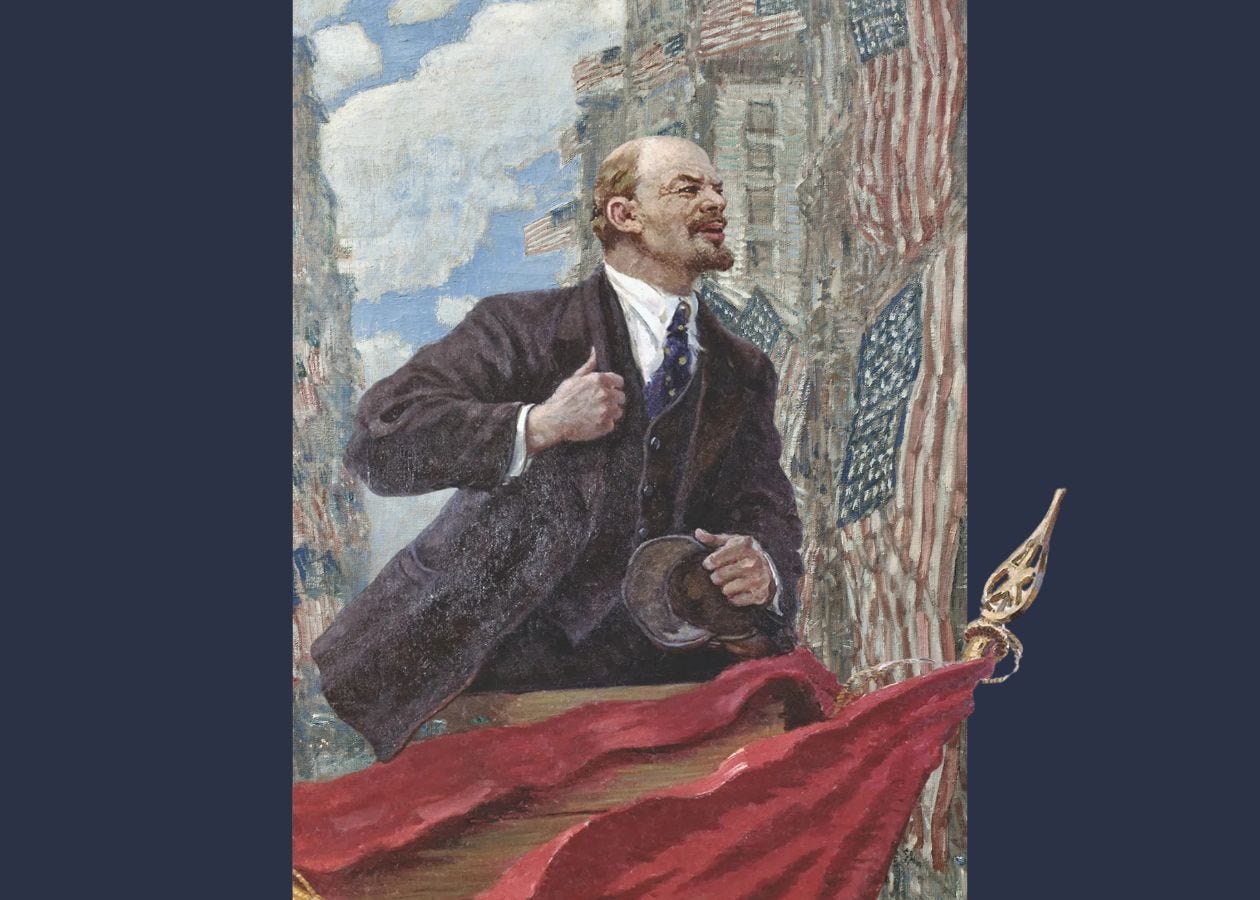
Vladimir Lenin even acclaimed the American breakup with Great Britain as “a model of a revolutionary war.” During Joseph Stalin’s later reign, one Soviet historian praised the Declaration of Independence as “a progressive document of its time.”
1776 remained almost untouchable in the USSR. It’s a historical irony that today’s American far left holds the founders in lower regard than Soviet Communist Party ideologues, who could not help but respect the rebels who humbled the imperialists in London.
My own Soviet education was… unorthodox. There was the influence of the Jewish side of my family, who were highly critical of the Soviet regime. As a chess player, I also had far more access to the West than my comrades, so I approached America with extra curiosity and reverence. I devoured as much information as I could about the USA before I even visited the place.
On the sidelines of a Brussels tournament in 1986, I approached grandmaster Nigel Short, a Brit, with a friendly trivia exercise. He had to name at least 10 of the 15 Soviet republics, and I would have to list off at least 40 of 50 US states. Nigel, who’d been to the Soviet Union, struggled to identify two thirds of its provinces, but I proudly exceeded my minimum with 42 American states named (apologies to the people of Tennessee, I have a strong recollection that I forgot to call out the Volunteer State!).
I finally made it to the US in 1988, stopping in New York and DC. That trip was a whirlwind. The energy of American democracy was magnetic even to a non-American like me, but it took me a while to find my footing in US politics. I’d seen Ronald Reagan demand Mikhail Gorbachev tear down the Berlin Wall, and I wanted to belong to whatever movement the fortieth president represented. Yet, just a few years later, I watched as the first President Bush took pains to appease the Soviets. Just months before the USSR collapsed, he warned Ukrainians not to declare independence. In that moment, George Bush sounded a bit like King George III.
I am also socially liberal, and I found certain areas of agreement with Democrats. Ultimately, however, I decided that my path would be non-partisan and independent. Yet the novelty of a political system with more than one party, a system where not joining a party was also an option, will remain exciting for this child of the Soviet Union for as long as I live.
I carried my enthusiasm for America back to post-Soviet Russia with hope for a blank slate upon which to plant the self-evident truths about human freedom to which I’d been exposed.
You and I both know what came next. After years of protest, an arrest, and several friends jailed and murdered, I decided that my campaign against Vladimir Putin’s KGB regime would be most effectively waged outside of Russia’s borders. Fighting a ruthless dictator, where better to go than America? This is a country founded by people who pledged to one another “our Lives, our Fortunes and our sacred Honor.”
All of that dynamism goes back to the Declaration, a blueprint for colonies reconstituted as “Free and Independent States.” America’s founding charter continues to be the model for liberation movements the world over. Declarations of independence from Korea to Kosovo have borrowed from language crafted two and a half centuries ago in Philadelphia.
It was for this reason that the United States of America stood apart in Soviet propaganda from Russia’s traditional rivals in Europe. Like the USSR, the USA was a country built upon an ideal, a new society. In this respect, America was not so much an immortal enemy as a fellow revolutionary state that had lost its way.
In reality, of course, it was the Soviets and their successors who constantly betrayed the principles of universal human rights. America is far from perfect, but for decades, its story was one of ever-expanding liberty. In Russia, the trajectory was one of instability, stagnation, and authoritarian decline.
Still, there are no fixed patterns in history. America’s continued success and openness are not guaranteed. For many Americans, this milestone Fourth of July may pass by as a kind of dull pain, a celebration seen as tone deaf amid the constant stream of insults and abuses flowing from the White House.
I am pushing back against the impulse to despair, and I appeal to you to do the same. America was the inspiration of my youth, and it has been my safe haven in more recent years. My wife and children are American citizens—thank goodness, by the way, for the Supreme Court’s ruling on birthright citizenship!
Ensuring this country’s future for the next 250 years and beyond means staking a claim to a proud legacy that goes back to July 4, 1776. Do not cede it to demagogues and extremists. Recognize that if you have something to lose, then you have something to fight for.
Happy Independence Day!
More from The Next Move:
The Birthright Citizenship Ruling, Explained

Birthright citizenship survived a Supreme Court test, but opponents aren’t giving up.
Remembering My “American Supermarket Moment” This Thanksgiving

Despite growing up in the USSR, I was exposed to the fruits of a free society from a young age.
Thank You Mr. Kasparov for your keen insights and reminder that, WE THE PEOPLE have as much to overcome, as we have to celebrate.
Thank you for this heartfelt essay. It is an encouragement during a politically dark and dangerous time in this country.